First Drafts:
A conversation about the importance and power of language
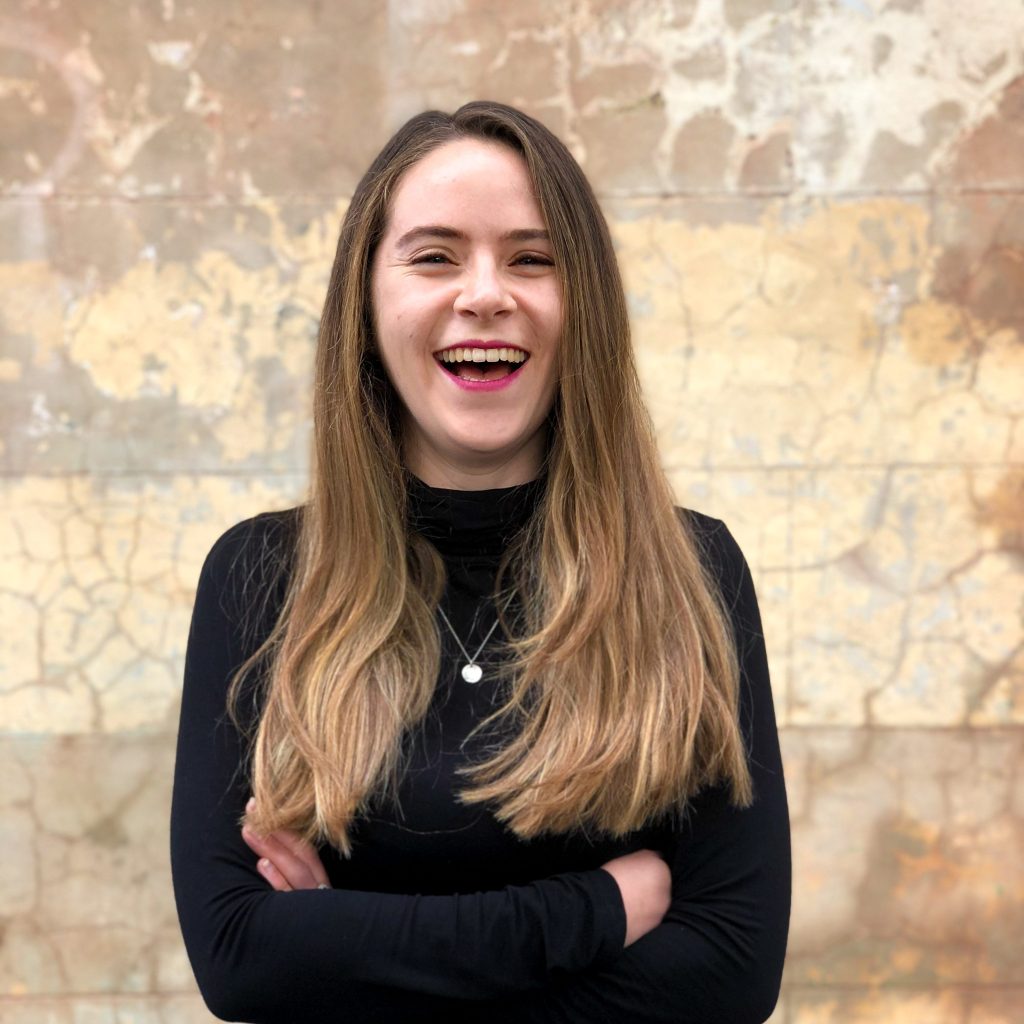
with Bronwyn O’Reilly, Exhibitions and Galleries Editor at the Natural History Museum
Reading time: approx. 8 minutes
A dyslexia and ADHD friendly bionic version of this piece is available to read online or download here.
Disclaimer: this is a personal interview provided by Bronwyn pro bono and while we are discussing how the importance and power of language informs her professional work, its content is not affiliated with the Natural History Museum. Original posted October 2023.
Disclaimer: with the consent, contributions and approval of the interviewee, recorded responses have been amended for clarity.
Hi Bronwyn, why don’t we start with you introducing yourself?
I’m an Editor at the Natural History Museum, working specifically on writing for galleries and exhibitions. My role is to work with exhibition writers and sometimes scientists and curators to ensure the scientific content has a coherent narrative that is being communicated in a clear, friendly way.
Can you tell me a bit about your career journey?
I began as an editor back in Australia working in academic publishing at Sydney University Press. This job honed my ability to become enthusiastic and engaged in any subject, such as cane toads or indexing. One of my jobs was to help a programming team develop the indexing function for a format-independent content management system and so I had to really get into indexing and you know what? Challenge accepted. I ended up co-authoring an article for The Indexer magazine.
I then moved into children’s publishing, working at Penguin Random House. I thought this would be a steppingstone on my career path as I wanted to go into adult publishing, but I ended up really loving working in children’s books. When I moved to the UK, I got a job as a Desk Editor in Bloomsbury’s Children publishing department, which I left in 2018 before starting my current job at the Natural History Museum.
One thing that I keep coming back to is the opportunities that opened up to me because I had the privilege of interning, i.e. working for free. When I was at university I was able to take the time to intern at Sydney University Press – that’s how I got my first publishing job. After I was employed at Sydney University Press, I was able to take a day off work each week for 8 or so weeks, which allowed me to intern at Penguin Random House and at HarperCollins – and showing my worth through the internship is (I think) what pushed me over the line and landed me the role as Children’s Editor at PRH. This system of free work opening doors is how publishing becomes filled with the same people with the same privileges.
One of the things I really admire about your working style is how good you are at looking at a piece of writing in detail, while still being really careful to think about the bigger picture.
Thanks. I do think both are important.
There is this possible perception of editors as these witches that get in there and add extra ingredients into the pot that you didn’t want and then spit out a different potion that you didn’t want, and that’s not what a good editor is, a good editor will suggest that you might have forgotten and ingredient or suggest that you chop something finer because it might not be working in the way you were hoping it would… I’ll stop with the witch analogy. What I mean is that editing is a conversation – it’s a lot of questioning and back and forth. A good editor will be a good listener. They’ll help the author say what they want to say.
What first got you interested in the power and importance of language?
I started really focusing on language when I began working in children’s publishing. I considered the audience for what I was editing: To use an example, one of things that really struck me recently in a book I was working on was the language that was being used for male vs. female characters (all characters were either male or female, and that’s a whole other point). Nowhere in the book did it say explicitly that the male characters were active leaders and the female characters were passive followers, but their roles in story, and the language around those characters, made those views implicit. Male characters “shouted”, “ran”, gave orders and moved the plot along; females characters spoke “softly”, “walked”, and made suggestions.
I highly doubt the author intended to send these messages, but they did. And it’s a powerful message being sent to impressionable kids.
But as I say, this is just one example, about one book aimed at one particular audience. Language is powerful in any and every context. What message is it sending, intentionally or otherwise?
How does thinking about language inform your work day-to-day?
What I always try to do is to think about what I don’t know. I try to be curious and to interrogate and scrutinise what’s being said and to not make assumptions. Asking questions about what is being said and why is important for any kind of editing, but it’s a really significant part of my current role.
My job is to work with the writers and scientist at the museums to ensure each new text panel or piece of exhibition copy for the museum is accurate, concise, and written in a way that is accessible and engaging for visitors. A crucial part of that is looking at whether any human narratives are coming into play and making the writing – the messaging – unscientific.
As an example: Anthropomorphising animals and plants can be a shortcut to empathy, which is great: we want people to care about animals and plants. But if say, for example, you captioned a picture of two birds “A mother bird gazes lovingly at its young,” you need to consider a) whether that’s even scientifically accurate and b) what’s being implied from a human perspective. Is the information we want to convey that the bird that lays the eggs takes on a more dominant caregiving role with its chick? Then that’s absolutely fine. But let’s think about the way we’re saying it, because the language in the example I just gave is perpetuating damaging human stereotypes, that it’s a woman’s role in society to be a primary caregiver.
Would you need to gender the bird?
That’s a great question, and one we ask all the time: why are we drawing particular attention to sex in the copy? Is it integral to the point we’re making? If so, great. It would be named as a female bird, but then we’d refer to it as “the bird” or “it”. But let’s really think about it and answer honestly: are just speaking about sex out of habit? Is there a more relevant /more engaging story we could be telling?
Another thing is looking at language around the actions of non-human species. For example, a common phrase is a ‘colonising species’. There’s great work being done in scientific communities looking at language like this. Does this plant have agency? Did it grow arms and legs and row across the ocean to New South Wales? No, a human moved it. And, an even more important point here would be the damaging reliance on language to do with colonial legacies. We can do better.
That colonisation aspect is really interesting, how we look at other species as something for humans to discover.
There’s also bias in how we’ve told history in the past in terms of which people are said to have discovered something already known to Indigenous people. But yes, going back to what you said, there are a lot of species that humans “discovered” that have names which are either offensive (for example, mimicking the sound of the Indigenous given name) or incorporate the name of the possibly terrible person who “discovered” it. Again, a lot of work is being done in scientific communities to redress this. It’s a very slow, complex, process. Old names are still being used in writing, even if for context so people know what’s being referred to when an article or whatever starts talking about something under its new name.
Do you feel supported in this work?
It’s not just me doing it, it’s obviously a thing a lot of people are considering and talking about, but yes – to answer your question, my team is very supportive. I’m being given the time and resources to look at these things and begin to carefully make changes.
Outside of your work at the Natural History Museum, what’s one thing you think the publishing industry is doing well in regard to this topic?
I have noticed there is a lot more talk about what language is being used and how it has the power to exclude and offend – or include and empower.
I see a lot more value being put on sensitivity reads. I remember a time when it would be the editor sending the manuscript to a friend of a friend, who might have been given a nominal fee for their hours of hard work. I see the contribution of sensitivity readers being increasingly highly valued, but what I’d ask is, are sensitivity readers being paid properly for their work? Are sensitivity reads being treated as an integral part of the publishing process? Is the time for sensitivity reads, and any changes that need making based on what comes back from them, being factored into publishing schedules? Are publishers willing to push back the pub date of a book to make changes? Are they willing to scrap the book if that’s what’s needed? (Though you’d also wonder how it managed to get to that point in the publishing process …) I think it very much depends on the publisher, but I do think at the moment, it does seem sometimes to be a box-ticking exercise.
And, of course, this sits within wider conversations about own-voice publishing, and whether lists truly feature a diversity of publishing and if not (as is often the case) why publishers aren’t being better.
What is it you would like to see improve? Do you have an opinion on what could be done to change how we approach language in the Editorial process?
If publishers employed people from different backgrounds and people who have more varied lived experiences, the way language and ideas are being considered and expressed would naturally be challenged and changed. Publishing pay is a huge part of this. The biggest thing I feel could change diverse representation in publishing would be to offer more paid internships, and to offer higher paid entry-level roles, so that the opportunity to enter the industry would be more accessible to more people.
Finally, what book are you currently reading?
I stayed up late last night to finish Yellowface by R F Kuang, I had to know what happened. I started Julius by Daphne Du Maurier this morning.
Thank you so much to Bronwyn for taking the time to talk with me.
Designed with WordPress
Text copyright Ruby Allen-Cadman 2025
Art copyright Inês Amaral Jaloto 2024

 Ruby Allen-Cadman
Leave a comment